Diagnosis can name something, but it doesn't necessarily help a person understand their particular relationship to it. Diagnosis is information; sensemaking is interpretation. This article aims to clarify the place of sensemaking as a crucial aspect of steps to understand one's relationship to a diagnosis.
A diagnosis can be a relief. For me, 25 years ago, having the word autism spoken by someone with authority enabled me to shed years of confusion and being misunderstood. I finally knew what I was dealing with, or so I thought.
As I look back on that time now, I see both advantages and disadvantages with the diagnosis. The advantages included an explanation of why I felt uncomfortable in certain social situations. It was an answer to why I felt misunderstood by my family of origin or others who expected me to be different to how I was.
Back then this was rarely spoken of. There was no AI or easy access short video reels with so many perspectives. I was asked to trust what that meant from the experts. What it apparently meant was not my lived experience, it was generalised descriptions which included things that had never happened to me such as depression or suicidal thoughts. As time went on I came to see the diagnosis was a beginning, like being thrown in the deep end while learning to swim. Temple Grandin's TED talk The world needs many minds was a game changer, as was Tony Attwood's articulation of Asperger's and Autism. The word syndrome was still fashionable, so there lurked this shadow of there being really something wrong with me underneath it all. I knew that learning was my pathway to perspective, and journeying with two young neurodiverse sons has been insightful.
I inevitably asked, so now what do I do? I realised other's descriptions of this condition were some of my experience but not all, so I came to see this diagnosis as a very blunt instrument. Eventually I began to see everyone is unique if I looked curiously enough, and thus began my questioning of what normal was and why this was confusing. This led me to Physician and trauma expert Gabor Maté, who argues that what Western society considers "normal"—competitive achievement, emotional suppression, and relentless compliance—is actually a pathological system that drives chronic illness, addiction, and disconnection. He called this the myth of normal.
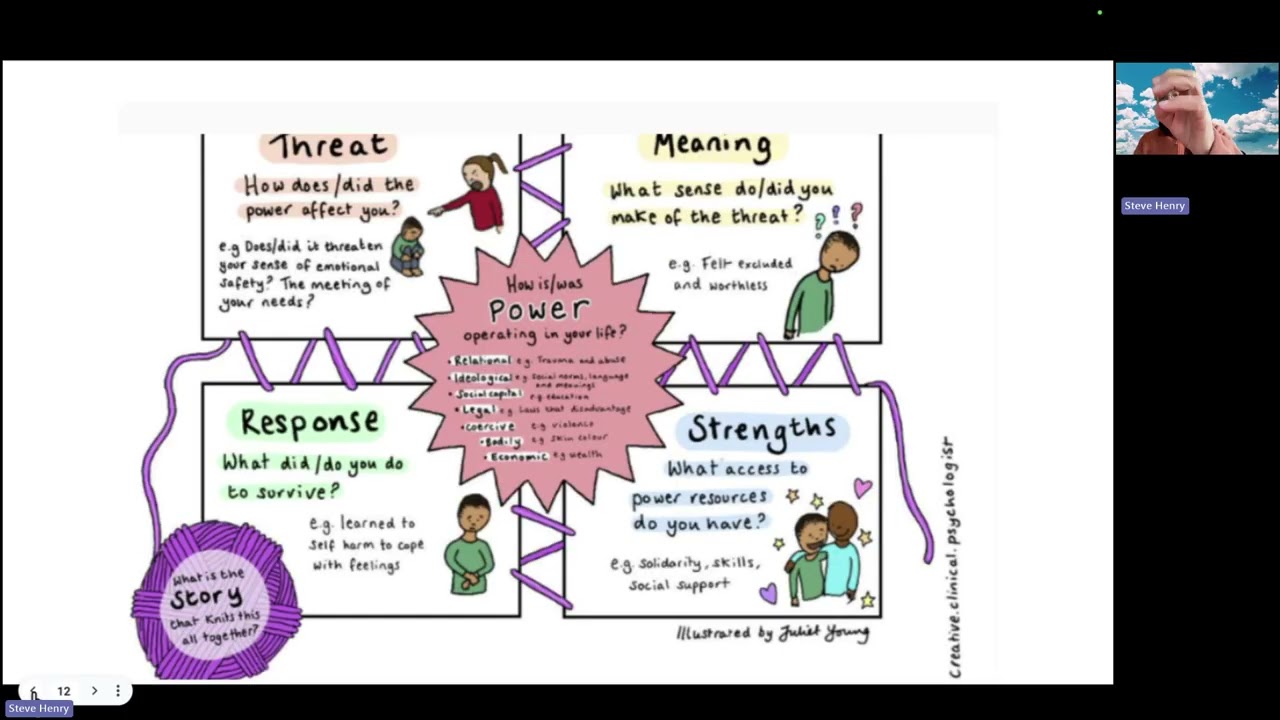
So my hope that a diagnosis would somehow make me feel normal shattered. I kept exploring, and I found that in 2013, the system for diagnosing Autism was called "inhumane and unfit for purpose" in a major study commissioned by the British Psychology Association and thus they commissioned research into developing an alternative model. What emerged was that distress has its origin in power, threat and meaning. This perspective shifts the mental health narrative from asking "what is wrong with you?" to "what has happened to you?"
This reframing transformed my diagnosis from something being wrong to exploring my patterns in new ways. Once I had a diagnosis, there was a temptation to explain everything through it: "I'm autistic, therefore I do X." But sensemaking asks a more interesting question: "What combination of neurobiology, experience, learning, relationships and context contributes to me doing X?" That preserves agency without returning to blame. As I delved further into the power, threat and meaning framework, I was asked "What has happened to you?"
I started to realise some people treated me like I had a disease which could be treated. I now see the pros and cons of diagnosis and that time and the importance of how the realisation of being neurodiverse is communicated about. When my son was 14 he asked why the kids called him "Aspie" so we sat down and laid out how we see it — pros and cons of his unique ways of being. I am grateful little changed for him that day. His sense of identity was intact because diagnostic descriptions can become identity descriptions.
While a diagnosis can be helpful, the context that it occurs in is crucial. Is there a context of an open mind, or a closed one? Is there a loyal dedication that experts know best so I will trust that without further consideration? And perhaps most of all, whose advice am I listening to from here? With such an excess of knowledge available now, and potential access to experts, the key issue becomes how we navigate all this to make sense of it.
Sensemaking is how we make sense of the world so that we can act in it. To make sense requires the patterns of lived experience to be seen. This requires reflection and the courage to own the unauthentic parts of ourselves that have been constructed to cope. Perhaps sensemaking isn't about uncovering an authentic self that was always hidden. Instead, it might be about understanding how the person you have become was constructed—and deciding which parts you want to retain, change or let go of.
As a part of a doctorate in professional practice, I interrogated my patterns of construction to realise how much I had to mask my natural behaviour to be able to operate in a formal institutional context, as I did for over 30 years. I found my survival strategy was to create bias, which was a way to cope with overwhelm.
This was led by my cognitive dissonance — the refusal to examine some aspects of my behaviour because of the discomfort that entailed. Once this was seen, I could look at my relationship to authority. I realised my rebellion was because I gave far too much power away to others in positions of perceived authority so that I could belong. Finally the drive to be clever in order to fit in went right back to learning my mother's attention was a limited commodity and if I dazzled her, I got more of it.
Having coached neurodiverse people for a couple of decades now, I have seen that each person's patterns are different, yet the process of making sense was consistent. This sensemaking process has five steps.
Firstly, to identify the narratives past and present that inform the way you are. An exercise to reveal the past is to consider your life as a book, and to give the different chapters of your life story a context and identify the significant experiences. A way to identify the current narratives is to construct what I call your operating manual — a set of instructions for yourself to guide the decisions you make. Both these exercises are under constant refining, and in my case I began them over 40 years ago and they are still changing as I identify new narratives that inform how and who I am.
Secondly in the sensemaking process is examining the patterns in relation to power, threat and meaning. This explores the questions stemming from what has happened. These include: What has happened to you? (How does power operate in your life?) How did it affect you? (What kinds of threats does this pose?) What sense did you make of it? (What is the meaning of these experiences?) What did you have to do to survive?
A diagnosis results in power being given to an expert — as you can see from my story this has pros and cons. A key dimension of a diagnosis is it removes the agency to make sense of what is going on. The power is deferred to an expert. Each person's experience of this is different. For some it is not important yet for others such as myself I hid behind my diagnosis accepting what others told me about me. This was a significant pattern to uncover.
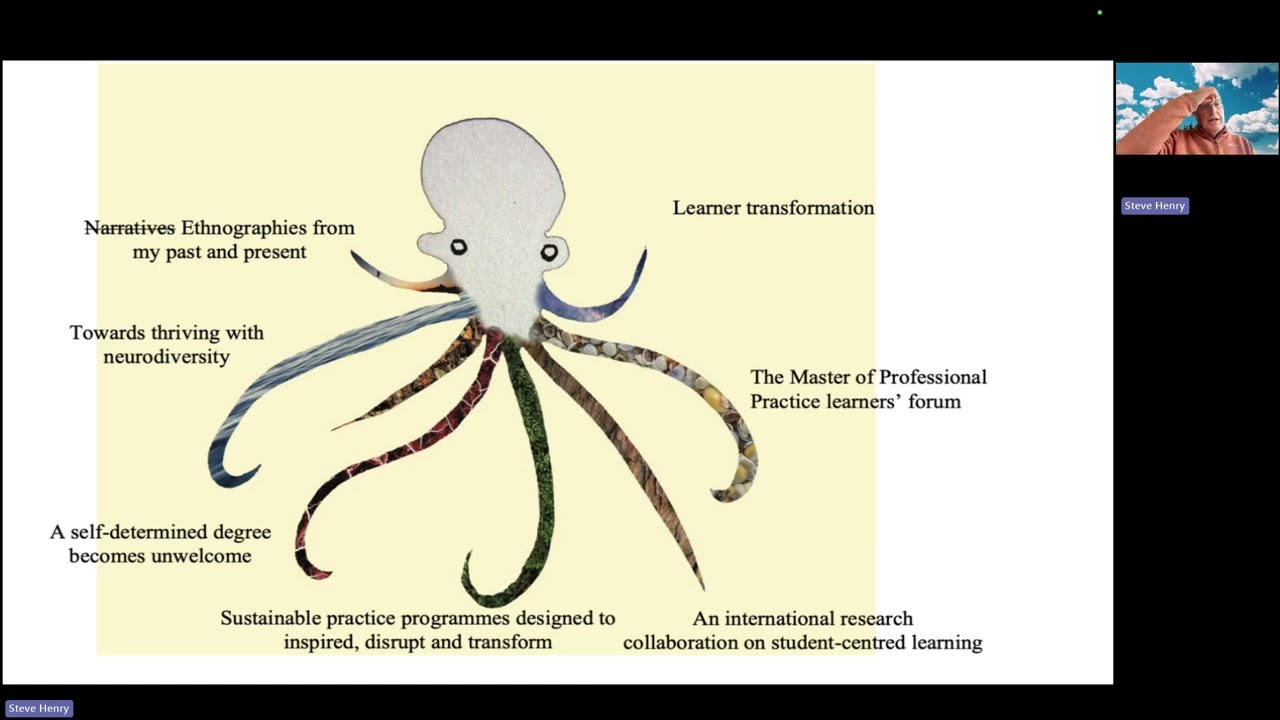
Once some patterns are seen, it's time to drive further insight through metaphor, the third step in the sensemaking process. Metaphor has been shown to enable our minds to access much more of an experience because the amount we can think and feel rationally is limited. By moving to an abstract idea, there are new aspects to be revealed. For example I have imagined myself as an Octopus, and realised I have hidden away and been clever to camouflage. As I deepened my enquiry, I began to see the idea of masking predators with cloud of ink was akin to baffling myself and others with my cleverness to hide the real me. And so the insights went on until I discovered an Octopus that hides in plain sight in the open sea, rather than in a crack where it is trapped, can have a lot more perspective. I came to see my masking patterns were adaptation to contexts I did not control. These fresh insights give me new perspective on old narratives and are somehow more felt and embodied through a metaphor.
The fourth step in sensemaking is to articulate the new patterns. I find it helpful to do this by considering the shifts from the old me to the new me, the old story to the new story, the old operating manual to the new. Some of my shifts have been:
- From accepting a diagnosis to realising it was someone's time-limited medical opinion about me while being grateful for what that was then
- From showing how clever I am in order to be included, to being more myself unfiltered and then seeing if I am included
- From being compliant in social norms when they harm me to being more assertive to name my needs (e.g. the impact of noise and overhead lights)
- From being rebellious when others have power over me to being proactive to be in environments where power is shared
The fifth step is to create the conditions for different choices. Sensemaking isn't simply about understanding myself. It is about having more choices about how I respond. For me, this has meant recognising the conditions in which different responses become possible. For example, I have found that doing this work alone is less effective than having trusted others to share it with. Trusted others amplify sensemaking. When I first had the courage to share more of myself, it was vulnerable and uncomfortable. Over time, however, it became my new normal. I have found spaces where I belong, rather than constantly trying to fit in.
This has led me to create communities in spaces where sensemaking is enabled and people can get to the answers themselves. There is a therapeutic effect when people have the agency to ask "what am I in relation to this?" The role of others is to witness, and once invited, to ask the right question at the right moment. I now see my diagnosis as a piece of a complex puzzle that has enabled a step towards agency in a better picture to be formed. By making sense of my patterns, that picture continues to iterate and build, seeing what is a mirage and what is more real for me. The making sense method is not linear, rather it can be entered at any of the steps which leads to insight in the other steps. In my experience of working with people, it doesn't matter where you start, rather that you start. Write a journal, draw, sing, dance — whatever it takes to play with the patterns of your life.
Summary of Sensemaking Steps and reflection actions
Identify the narratives — past and present
Look back and within. Map your life chapters and significant experiences. Create an operating manual describing how you understand yourself, your needs and how you make decisions.
Examine patterns through Power, Threat and Meaning
Explore what happened and what you made of it. Consider power, threats, meaning and the adaptations you developed to survive.
Drive further insight through metaphor
Explore what is hard to say directly. Use a metaphor, image or story to reveal patterns and possibilities that rational analysis may miss.
Articulate changing patterns
Name what has shifted. Compare old and emerging stories, patterns and operating manuals. Identify what you now understand or might do differently.
Create the conditions for different choices
Explore what makes different responses possible. Identify supportive people, relationships, environments and practices. Experiment with them and notice what changes.
The Making Sense programmes are facilitated coaching experiences that use the above sequence to support people to better understand themselves, their relationships and the contexts they are part of. Rather than teaching people what to think, the programmes guide participants through a structured sensemaking process of practical reflection tasks that uncover patterns, generate new insights and support more meaningful and empowered choices. The programme is a combination of individual and group support.
References
- Grandin, T. (2010). The World needs all kinds of minds. TED Talk. ted.com
- Attwood, T. (2007). The complete guide to Asperger's syndrome. Jessica Kingsley Publishers.
- Maté, G. (2022). The Myth of Normal: Trauma, illness, and healing in a toxic culture. Avery.
- Johnstone, L., & Boyle, M. (2018). The Power Threat Meaning Framework: Overview. British Psychological Society.
- Snowden, D. J., & Boone, M. E. (2007). A leader's framework for decision making. Harvard Business Review, 85(11), 68–76.
- Noah, T. (Host). (2026, June 4). Brené Brown: The rage bucket theory (Season 3, Episode 39) [Audio podcast episode]. In What Now? with Trevor Noah. SiriusXM.